

⚡ Quick Answer: Best Plant-Based Sources of Omega-3
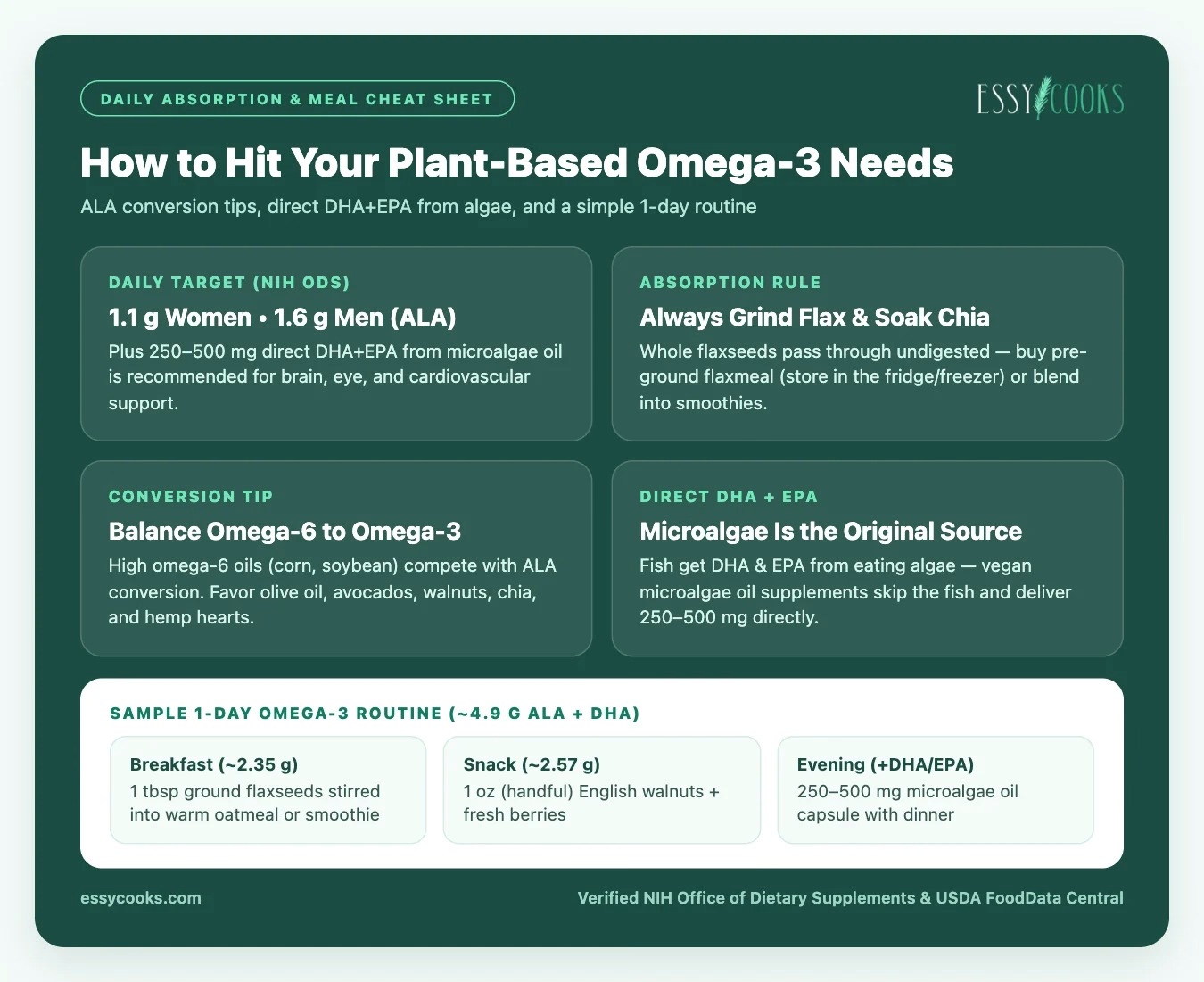
According to the NIH Office of Dietary Supplements, adults need 1.1 g (women) to 1.6 g (men) of ALA Omega-3 daily. Just 1 tablespoon of ground flaxseed (2.35 g ALA), 1 ounce of chia seeds (5.06 g ALA), 1 ounce of English walnuts (2.57 g ALA), or 3 tablespoons of hemp seeds (2.6 g ALA) exceeds 100% of your daily ALA target. For direct EPA & DHA, vegans can add a fish-free microalgae oil supplement.
Looking for Plant-Based Sources of Omega-3 Fatty Acids? Omega-3 fatty acids are essential for our overall health and well-being. However many people don’t realize that these vital nutrients can also be found in plant-based sources.
📊 Top Plant-Based Sources of Omega-3 ALA (Grams per Serving vs. 1.6 g DV)
Comparison of plant-based ALA (alpha-linolenic acid) and microalgae DHA/EPA based on USDA FoodData Central & NIH ODS data.
Data sources: NIH Office of Dietary Supplements (Omega-3 Fatty Acids Fact Sheet) & USDA FoodData Central. Tip: Always grind whole flaxseeds (or buy milled flax meal) so your body can absorb the Omega-3 oils.
Whether you’re a vegetarian, vegan, or simply looking to incorporate more plant-based options into your diet, there are plenty of delicious and nutritious ways to get your daily dose of omega-3s.
Plant-Based Powerhouses: Top 10 Sources of Omega-3s
Looking for ways to add more omega-3s to your diet without relying on fish or fish oil supplements? You’re in luck! There are plenty of plant-based options that are rich in this essential fatty acid. From leafy greens to nuts and seeds, these foods can help support brain and heart health. In this chart, we’ve rounded up the top 10 plant-based sources of omega-3s, ranked by their content of alpha-linolenic acid (ALA), one of the three main types of omega-3s found in plants.
| Food | Serving size | ALA (mg) |
|---|---|---|
| Flaxseeds | 1 Tbsp | 5713 |
| Chia seeds | 1 Tbsp | 4830 |
| Hemp seeds | 1 Tbsp | 3000 |
| Walnuts | 1/4 cup | 2510 |
| Brussels sprouts | 1/2 cup | 558 |
| Spinach | 1/2 cup | 446 |
| Kale | 1/2 cup | 348 |
| Parsley | 1/4 cup | 259 |
| Mustard greens | 1/2 cup | 240 |
| Arugula | 1/2 cup | 206 |
Best Plant-Based Sources of Omega-3
Flaxeeds
One of the best plant-based sources of omega-3s is flaxseed. These tiny seeds pack a powerful punch when it comes to omega-3s. With a single tablespoon provides more than half of your daily recommended intake. Flaxseed is also a great source of fiber and lignans, which have been shown to have anti-cancer properties. Try adding ground flaxseed to vegan smoothies, oatmeal, or baked goods for an easy and delicious way to boost your omega-3 intake.

Chia Seeds
Another great plant-based sources of omega-3 is chia seeds. These tiny seeds are packed with omega-3s, as well as antioxidants, fiber, and minerals. They can be added to smoothies, yogurt, or oatmeal for a nutritious boost. Or made into a gel by mixing them with water.
Walnuts
Walnuts are another great plant-based source of omega-3s. Their crunchy texture and rich flavor make them a perfect addition to vegan salads, snacks, or baked goods.
Seaweed
Another plant-based source of omega-3s is seaweed, including nori, which is used to wrap sushi, dulse, and kelp. These sea vegetables are not only a great source of omega-3s. But also contains a wide range of other nutrients, including iodine, which is essential for a healthy thyroid.
Conclusion: Plant-Based Sources of Omega-3 Fatty Acids
Incorporating these plant-based sources of omega-3 into your diet is a delicious and easy way to support your overall health and well-being. Whether you’re looking to boost your brain power or improve your heart health. Or simply want to enjoy the many benefits of these essential nutrients, plant-based sources of omega-3s are a great option. So, wave goodbye to fish oil supplements, and say hello to these tasty plant-based options.
Source For Plant-Based Sources of Omega-3
- Nutritional databases, such as the USDA National Nutrient Database
- Medical and scientific journals, such as the Journal of Lipid Research or the American Journal of Clinical Nutrition
- Health and wellness websites, such as Healthline or Medical News Today
- Plant-based and vegan blogs and websites, such as The Spruce Eats or One Green Planet
- Books and guides on plant-based nutrition and health, such as “The China Study” by T. Colin Campbell or “The Plant-Based Solution” by Joel Kahn.



📚 Authoritative Sources & Further Reading
Frequently Asked Questions About Plant-Based Omega-3
Which plant food has the highest Omega-3 content?
Chia seeds, ground flaxseeds, hemp hearts, and English walnuts are the top whole-food sources of Omega-3 (ALA). A single tablespoon of ground flaxseed provides 2.35 g of ALA, and 2 tablespoons of chia seeds provide over 5 g.
Do vegans need a DHA/EPA algae supplement in addition to flax and chia?
Your body converts plant ALA into EPA and DHA, though the conversion rate is modest (typically under 10–15%). Many plant-based dietitians recommend eating 1–2 tablespoons of ground flax or chia daily AND considering a 250–300 mg microalgae DHA+EPA supplement—the exact same marine algae source where fish get their Omega-3.
Should flaxseeds be eaten whole or ground for Omega-3?
Always eat flaxseeds ground (milled). Whole flaxseeds often pass through the digestive tract intact, preventing your body from absorbing their Omega-3 fatty acids and lignans. Store ground flaxseed in the fridge or freezer to prevent oxidation.
What are easy ways to add plant Omega-3 to daily meals?
Stir 1 tablespoon of ground flaxseed or chia seeds into morning oatmeal or smoothies, sprinkle hemp hearts over salads and tofu bowls, or snack on a handful of walnuts.
Thanks for this great information and helping us all stay healthy! This is appreciated!!
You’re welcome thank you so much for reading!