
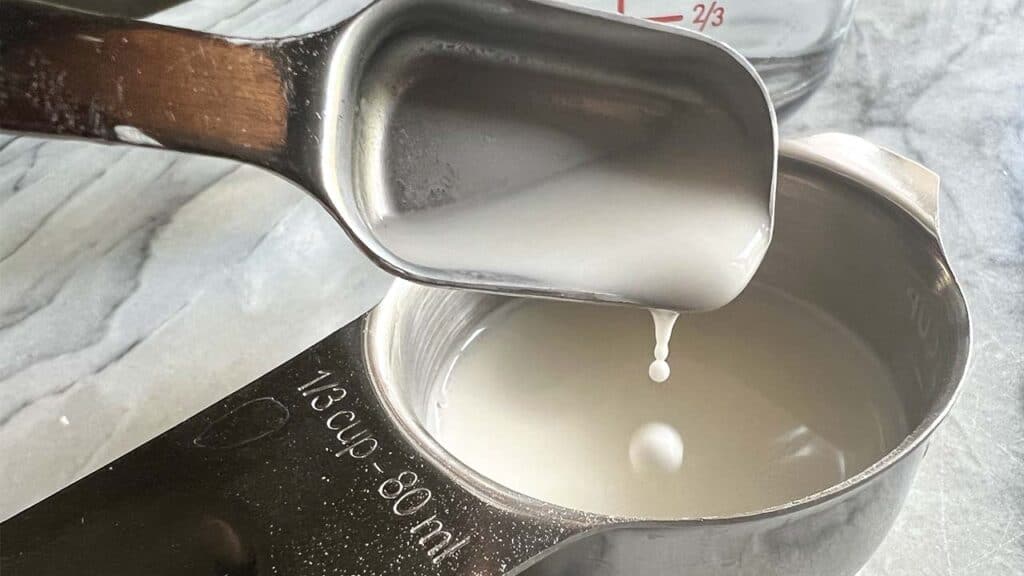
Quick Answer: How to Make a Cornstarch Slurry
Mix equal parts cornstarch and cold water (1:1 ratio) — for example, 1 tablespoon cornstarch + 1 tablespoon cold water. Whisk until smooth and lump-free, then stir into your hot sauce, soup, or stew. It thickens in under 2 minutes!
What Is a Cornstarch Slurry?
A cornstarch slurry is a simple mixture of cornstarch and cold water used as a thickening agent for sauces, soups, gravies, stews, and more. It’s the go-to thickener in Asian cuisine and is prized for creating smooth, glossy sauces without altering flavor. Best of all, it’s naturally gluten-free, dairy-free, and vegan.
Unlike flour-based thickeners (like a roux), a cornstarch slurry doesn’t require cooking with fat and works almost instantly when added to hot liquids. This makes it the fastest and easiest way to thicken any dish.
Ingredients & Substitutions
You only need two ingredients:
- Cornstarch — the thickening agent
- Cold water — must be cold to prevent clumping
The standard ratio is 1 part cornstarch to 1 part cold water. For example, 2 tablespoons of cornstarch mixed with 2 tablespoons of cold water.
Substitutions and Variations
- Vegetable broth instead of water for richer flavor (keep it cold)
- Arrowroot powder — works similarly, slightly more neutral finish
- Tapioca starch — gives a slightly chewier, more elastic texture
- Potato starch — another gluten-free alternative with similar thickening power
How to Make a Cornstarch Slurry (Step-by-Step)
- Measure your ingredients: Use a 1:1 ratio. For every tablespoon of cornstarch, use one tablespoon of cold water.
- Whisk thoroughly: Combine the cornstarch and cold water in a small bowl. Whisk or stir with a fork until completely smooth and lump-free.
- Add to your hot dish: Pour the slurry slowly into your simmering sauce, soup, or stew while stirring continuously.
- Cook briefly: Continue cooking for 1-2 minutes until the mixture thickens to your desired consistency. If it’s too thick, add a splash of liquid to thin it out.

Tips & Tricks for the Perfect Slurry
- Always use cold liquid: Mixing cornstarch with cold water prevents clumping. Adding it directly to hot liquid creates lumps.
- Mix right before using: Cornstarch settles quickly, so whisk the slurry just before adding it to your dish.
- Add gradually: Pour the slurry in slowly while stirring constantly. You can always add more, but you can’t take it out.
- Don’t overcook: Cornstarch can break down if cooked too long, leading to a thinner or spongy texture. Add it toward the end of cooking.
- Start small: Begin with 1 tablespoon of slurry per cup of liquid and adjust from there.
What to Use a Cornstarch Slurry For
Cornstarch slurry is incredibly versatile. Here are the most common uses:
- Stir-fries and Asian sauces: The classic use — creates that signature glossy coating on vegetables and protein.
- Gravies and pan sauces: Thickens drippings or broth into a smooth gravy in minutes.
- Soups and stews: Adds body to thin soups without changing the flavor.
- Pie fillings and sweet sauces: Perfect for thickening fruit fillings and dessert sauces.
- Vegan cream sauces: Create rich, creamy textures in dairy-free sauces.
Cornstarch vs Flour: Which Thickener Should You Use?
Both cornstarch and flour are popular thickeners, but they work differently:
| Feature | Cornstarch | Flour |
|---|---|---|
| Thickening Power | Twice as powerful as flour | Less powerful; needs more quantity |
| Appearance | Smooth and glossy | Can be cloudy |
| Cooking Time | Thickens quickly (1-2 min) | Requires longer cooking to remove raw taste |
| Best Usage | Added to hot liquids at end of cooking | Often used in roux, cooked with fat from start |
| Gluten Content | Gluten-free | Contains gluten |
| Flavor Impact | None — completely neutral | Can taste “floury” if undercooked |
Pro tip: If substituting, use 1 tablespoon of cornstarch for every 2 tablespoons of flour. Cornstarch has roughly twice the thickening power.
Is Corn Flour the Same as Cornstarch?
No! Cornstarch is a fine white powder made from the starchy part of the corn kernel — it’s a pure thickening agent. Corn flour is made by grinding the entire corn kernel into a yellow powder and is used for baking (cornbread, tortillas). They are not interchangeable.
Gluten-Free Thickening
Cornstarch is naturally gluten-free, making it an excellent choice for those with celiac disease or gluten sensitivities. Other gluten-free thickener alternatives include arrowroot powder, tapioca starch, and potato starch.
The Science Behind Cornstarch Slurry
Cornstarch thickens through a process called starch gelatinization. When the starch granules are heated in liquid, they absorb water and swell dramatically, thickening the surrounding liquid. This is why cornstarch must be added to hot liquids to activate — but mixed with cold water first to prevent clumping.
One important note: overcooking can cause the starch molecules to break down, thinning your sauce. That’s why it’s best to add the slurry toward the end of cooking and only cook for 1-2 minutes after adding.
Helpful Tools
- Whisk or fork: Helps mix cornstarch and water thoroughly for a lump-free slurry.
- Measuring spoons: Ensures the correct 1:1 ratio every time.
- Small bowl or measuring cup: Makes it easy to mix and pour the slurry into your recipe.
FAQ: Cornstarch Slurry Recipe
The standard ratio is 1:1 — equal parts cornstarch and cold water. For example, 1 tablespoon cornstarch mixed with 1 tablespoon cold water. This creates the perfect consistency for thickening sauces, soups, and gravies.
Adding cornstarch directly to hot liquid creates clumps that are very difficult to dissolve. Pre-mixing with cold water ensures the starch granules are evenly dispersed, giving you a smooth, lump-free result every time.
No, always use cold water. Hot water causes the cornstarch to gelatinize immediately, creating lumps before you can mix it properly.
Cornstarch has twice the thickening power of flour. Use 1 tablespoon of cornstarch for every 2 tablespoons of flour your recipe calls for.
No, corn flour and cornstarch are different products. Cornstarch is a pure starch with powerful thickening properties, while corn flour is ground whole kernel used primarily for baking.
Start with 1 tablespoon of slurry (1 tbsp cornstarch + 1 tbsp water) per cup of liquid for a light thickening. Use 2 tablespoons for a thicker sauce or gravy. You can always add more if needed.
It’s not recommended — a blender can create too much air, making the slurry frothy. A simple whisk or fork works best.
Conclusion
A cornstarch slurry is one of the simplest and most effective tools in any kitchen. With just two ingredients and 60 seconds of mixing, you can transform thin, watery sauces into smooth, glossy perfection. Whether you’re making a stir-fry sauce, thickening a gravy, or perfecting a pie filling, this technique is essential.
Remember the key rules: always mix with cold water, use a 1:1 ratio, and add it to hot liquids at the end of cooking. Master these basics and you’ll achieve perfect consistency every time.
Great. Thank you for all the detail in your instructions. ????
You’re welcome! Thank you so much for trying it out! I try to make all my vegan recipes super easy to follow ????
Great! Quick easy and simple to make thank you!
Hi Martha, thank you so much for trying out my recipe, so happy it was easy to follow. ????