

If you have ever stood in the grocery aisle staring at a wall of tofu packages wondering whether to grab silken, firm, or extra-firm, you are not alone! While all tofu starts from soybean milk, the difference in water content, texture, and pressing methods completely changes how each variety behaves in your kitchen.
Using the wrong type of tofu can ruin a dish—turning a crispy air fryer dinner into mush, or making a creamy sauce grainy. In this comprehensive guide, we will break down the exact differences between silken tofu and firm tofu, their nutritional profiles, pressing requirements, and the best recipes for each type.
- Silken Tofu: Unpressed, high water content, custard-like texture. Best for smoothies, creamy pasta sauces, dips, and desserts like chocolate mousse.
- Firm / Extra-Firm Tofu: Pressed, low water content, sturdy texture. Best for baking, air frying, stir-fries, and grilling.
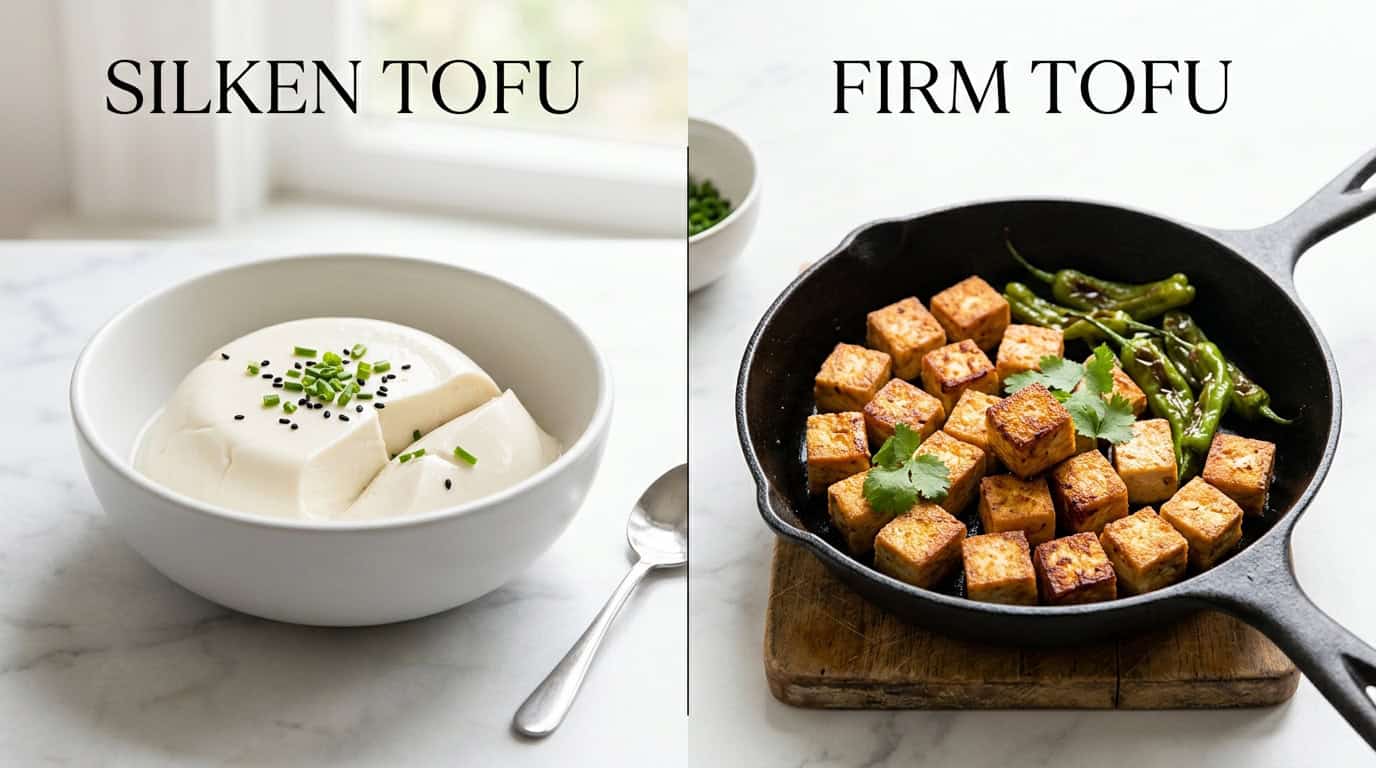
Silken Tofu vs. Firm Tofu: At a Glance
Here is a quick reference matrix comparing all major tofu varieties by texture, water content, and culinary use:
| Tofu Type | Texture & Moisture | Pressing Needed? | Protein per 100g | Best Culinary Uses |
|---|---|---|---|---|
| Silken Tofu | Custard-like, delicate, unpressed | ❌ No (Will break apart) | ~5g – 6g | Blended sauces, dressings, mousses, smoothies, egg substitutes |
| Soft Tofu | Slightly firm silken, tender | ❌ Gently pat dry | ~6g – 7g | Soups (like Sundubu Jjigae), gentle scrambles, dips |
| Firm Tofu | Sturdy, rubbery, holds shape | ✅ Yes (15-20 mins) | ~8g – 10g | Pan-frying, scrambles, baked tofu cubes, salads |
| Extra-Firm Tofu | Dense, compact, very sturdy | ✅ Recommended | ~10g – 13g | Air frying, stir-fries, breaded tofu cutlets, grilling |
| Super-Firm Tofu | Vacuum-sealed, no water tub | ❌ Pre-pressed! | ~14g – 17g | Shredding/grating, tofu deli slices, skewers, quick meal prep |
1. What is Silken Tofu?
Silken tofu (also known as Japanese-style tofu) is unpressed and retains all of its moisture during production. Coagulants are added directly to soy milk inside the final packaging, resulting in a smooth, jelly-like curd without whey separation.
Key Characteristics of Silken Tofu:
- Texture: Silky, slippery, and delicate (feels similar to panna cotta or thick yogurt).
- Packaging: Often sold in aseptic cardboard cartons (shelf-stable) or plastic tubs submerged in water in the refrigerated section.
- How to Prep: Never press silken tofu—doing so will crush it into mush! Simply drain the liquid and gently scoop it out.
Best Uses for Silken Tofu:
Silken tofu acts as an incredible dairy-free and egg-free emulsifier. Because of its ultra-smooth texture when blended, it is perfect for:
- Creamy Vegan Sauces: Blending silken tofu creates rich pasta sauces without oil or heavy cashew nuts. Try it as a base for creamy sauces or our popular Vegan Egg Salad Sandwich made with Tofu.
- Dairy-Free Desserts: Ideal for chocolate mousses, puddings, and vegan cheesecakes.
- Salad Dressings & Dips: Creates protein-packed ranch, mayo, or green goddess dressings.
- Egg Replacement: Use 1/4 cup of blended silken tofu per egg in baking recipe recipes like muffins or quick breads.
2. What is Firm & Extra-Firm Tofu?
Firm and Extra-Firm tofu (Chinese-style tofu) are made by curdling soy milk and pressing out the liquid whey. The longer the curd is pressed, the denser and firmer the resulting block becomes.
Key Characteristics of Firm Tofu:
- Texture: Solid, meaty, and slightly elastic. It easily absorbs marinades and withstands high cooking temperatures.
- Packaging: Sold in plastic tubs packed in water in the refrigerated section of the grocery store.
- How to Prep: Requires pressing for 15–30 minutes to remove excess moisture so it can absorb flavors and get ultra-crispy.
Best Uses for Firm & Extra-Firm Tofu:
If your goal is crispy, savory, protein-dense tofu dishes, firm and extra-firm are your go-to options:
- Air Frying: Extra-firm tofu gets unmatched crispiness in the air fryer. Check out our Crispy Air Fryer Tofu Bowls for the ultimate crunch.
- Breaded Cutlets & Steaks: Sliced firm tofu holds up perfectly to pan-frying and breading. Try our popular Easy Breaded Tofu Steaks or Vegan Cajun Chicken Made with Tofu.
- Stir-Fries & Meal Prep: Holds its structure when tossed with veggies and savory sauces, like in our Mongolian Tofu Meal Prep and Buffalo Tofu Wraps.
3. What is Super-Firm Tofu?
Super-firm tofu has almost all water pressed out before packaging. It is typically sold vacuum-sealed in plastic without a water bath.
Because it requires zero pressing, it is the ultimate shortcut for fast weeknight dinners. Super-firm tofu is so dense that you can easily slice it ultra-thin or shred it on a box grater for taco meat! Check out our Easy Vegan Tofu Deli Slices for a great example of super-firm tofu in action.
Nutritional Comparison: Silken vs. Firm Tofu
Because water content varies dramatically between varieties, the concentration of protein, calories, and minerals varies as well:
Per 100 Grams (3.5 oz) Serving:
- Silken Tofu: ~55 Calories | 5.3g Protein | 2.7g Fat | 1.4g Carbs
- Firm Tofu: ~85 Calories | 9.1g Protein | 4.8g Fat | 1.9g Carbs
- Extra-Firm Tofu: ~100 Calories | 11.5g Protein | 5.5g Fat | 2.0g Carbs
- Super-Firm Tofu: ~135 Calories | 15.5g Protein | 7.0g Fat | 2.5g Carbs
Note: Firm and super-firm tofu contain more protein per bite because less water volume dilutes the nutrients.
The Secret Freezing Trick: How to Get a Meaty Texture
If you want firm or extra-firm tofu to mimic the chewy, stringy texture of chicken or beef, the secret is freezing it first!
When you freeze a block of firm tofu, the water inside expands into ice crystals. As the ice melts during thawing, it leaves behind porous, sponge-like pockets. These empty pockets allow the tofu to absorb three times more marinade and crisp up tremendously when air-fried or pan-seared.
Only freeze Firm, Extra-Firm, or Super-Firm Tofu. Never freeze silken tofu—the high moisture content causes the emulsion to break, leaving behind a grainy, separated mess!
How to Freeze & Thaw Tofu in 3 Steps:
- Freeze: Place the unopened package of firm tofu directly into your freezer overnight (or up to 3 months).
- Thaw: Transfer to the refrigerator 24 hours before cooking, or microwave on defrost for 5–7 minutes.
- Squeeze: Gently press the thawed block between your hands over the sink—water will pour out easily like a sponge!
How to Press Tofu (Without a Fancy Press)
Pressing firm tofu is essential to remove water so seasonings can penetrate. Here are the three best methods:
- Method 1: The DIY Heavy Book Method: Wrap the block in a clean kitchen towel or paper towels. Place it on a plate and set a heavy cast-iron skillet or cutting board weighted with canned goods on top for 20 minutes.
- Method 2: Use a Tofu Press: If you cook tofu frequently, a dedicated tofu press applies even pressure and collects runoff water in a neat tray.
- Method 3: The Shortcut (Super-Firm Tofu): Buy vacuum-sealed super-firm tofu—it is pre-pressed and ready to cook right out of the package!
5 Common Tofu Cooking Mistakes to Avoid
If you have ever tried tofu and found it bland or soggy, one of these common mistakes was likely the culprit:
- Skipping the Press: Cooking unpressed firm tofu traps moisture, steaming the tofu instead of crisping it.
- Not Seasoning Generously: Tofu is a flavor sponge. Always marinate it with soy sauce, garlic, ginger, or spices, or coat it in seasoned cornstarch before frying.
- Crowding the Pan: When air-frying or pan-searing, leave space between cubes so steam can escape. Crowding leads to soft, rubbery cubes.
- Adding Oil Before Cornstarch: If tossing tofu in cornstarch for a crispy crust, coat the dry cubes in cornstarch first, then spray lightly with oil right before cooking.
- Using the Wrong Variety: Using silken tofu in a stir-fry will result in a broken mush, while using extra-firm tofu in a pudding will be grainy. Always pick the right variety for your dish!
How to Store Leftover Tofu & How Long It Lasts
Fresh tofu is perishable, but proper storage keeps it fresh for days:
- Unopened Packages: Keep refrigerated and check the package expiration date (usually valid for several weeks).
- Opened Raw Tofu: Submerge leftover blocks in a clean container filled with fresh water. Seal with a lid and store in the fridge for up to 3 to 5 days. Pro-Tip: Change the water daily to maintain peak freshness!
- Cooked Tofu Dishes: Store cooked, crispy, or marinated tofu in an airtight container in the refrigerator for up to 4 to 5 days. Reheat in an air fryer at 375°F for 3–5 minutes to restore crispiness.
Frequently Asked Questions
Can I substitute firm tofu for silken tofu?
In most cases, no. Firm tofu will not blend into a smooth, silky liquid for mousses or light dressings. However, if you are making a thick savory dip or mayonnaise, you can blend pressed firm tofu with extra liquid (like plant milk or water) in a high-speed blender as an emergency substitute.
Do you need to press silken tofu?
No! Do not press silken tofu. Pressing silken tofu will cause it to collapse into a watery paste. Simply drain the excess liquid from the container before using.
Which tofu is best for beginners?
Extra-firm or super-firm tofu is best for beginners because it is easy to handle, doesn’t crumble easily during cooking, and gets crispy quickly in an air fryer or skillet.